“They didn’t take me as seriously as they should have… because I’m a woman.”
–Dr. Julia Hoffman, Dark Shadows, episode 338
~ ~ ~
Dr. Julia Hoffman sat in the break room of the Windcliff Sanitarium with Dr. Dave Woodard… her friend (who wouldn’t mind at all if he were more than a friend).
“All in all,” Julia was saying, “I think my first interview went well. They, of course, wondered if I, a mere woman, could handle running this place,” she added sarcastically, “but…”
One (or 8 for that matter) isn’t enough to satisfy y’all! So here’s another essay about the 1966-1971 gothic daytime soap opera Dark Shadows…
In my previous essay about Angelique, I mentioned that Angelique had ambitions to better her station in life. Angelique, a lady’s maid to Countess Natalie du Prés, was raised from a young age as a servant. In the du Prés household in Martinique, Angelique learned the manners and mannerisms of the upper class, and wanted the lifestyle they lived.
Time for another essay about the 1966-1971 gothic daytime soap opera Dark Shadows…
When it comes to the 1795 Dark Shadows storyline, I am a bit of an Angelique apologist, with two huge exceptions:
1/ What Angelique does to Victoria Winters, the only person who, in the Collins household, offers Angelique friendship, one of the few people who wants to be kind to Angelique, and Angelique frames Vicki for being a witch (instead of herself)! Yes, it was an act of self-preservation on Angelique’s part, but it was still a nasty thing to do.
2/ What Angelique does to Sarah Collins when Barnabas tells Angelique that he knows that Angelique is a witch. Yeah, I get it, Angelique, you’re angry as heck at Barnabas, but sticking pins in a voodoo doll representing Barnabas’ little sister and then threatening to stick one right in the dolly’s heart? Sorry, that’s a step way, way too far. I was totally on your side before that (I wasn’t all that fond of Vicki, sorry).
Still… let me tell you why I have more compassion for Angelique than I do for most villains.
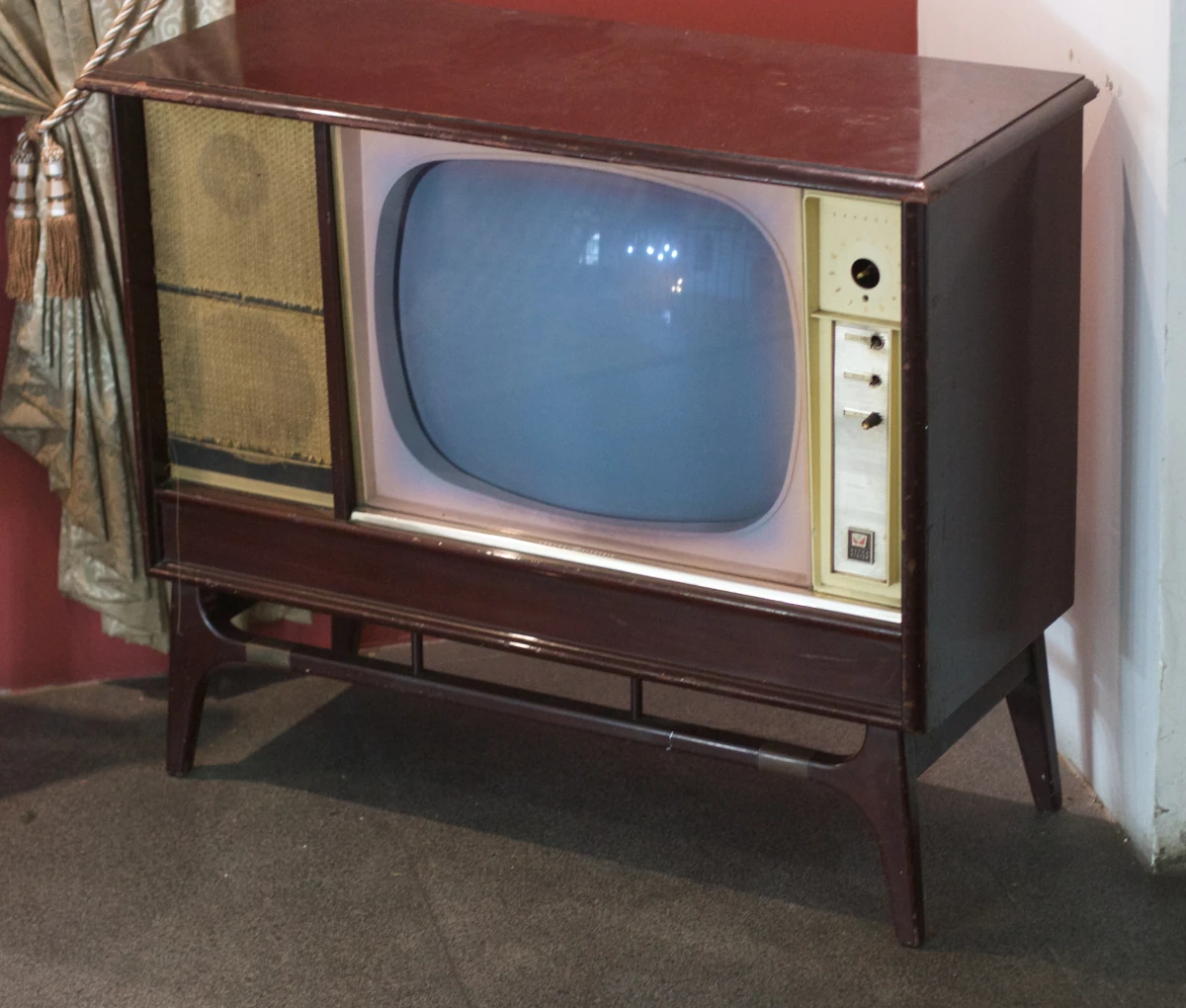
Our colleague Patrick McCray (of The Dark Shadows Daybook) asked us, suddenly, “If you were going to tell people briefly about the history of television, what would you emphasize?”
Well, you can’t ask Barb a question like that and not expect her to do anything with it, so she wrote the following essay. If you are someone who can’t remember a time before the internet, then you might find this educational. If you are someone who can remember a time before the internet, then you might find this nostalgic.
This installment of Married Geek Couple is in great part about things we grew up with, one way or another…
Barb: You and I share a love of children’s literature. How did you get into the “Great Brain” books?
Park: I think the Great Brain books were something I discovered on a shelf in a classroom. Maybe third grade? Or… Maybe another Reading Is Fundamental giveaway.
Barb: One of my fave jokes from The Simpsons mentions that Lisa reads The Great Brain books. One of us! One of us! We accept you! One of us!
Barb: Next question: How’d you get into The Rocky Horror Picture Show?
Barb: You learned to read and started reading at the age of two-and-a-half. What are the first books/stories you remember from that time?
Park: Not a lot, off the top of my head. I do remember seeing a for-tiny-babies library book called “The Egg And I” about a hen and her egg and thinking “I think I’ve heard about this, it’s also the title a movie or a book for grown-ups or something. Clever.” Toddler-me probably didn’t THINK the word “clever,” but it’s the non-toddler translation of my reaction.
…But… well, there were a few classics, now that I think about it a little more. Mike Mulligan had a steam shovel, I think? And I think there was also a brave little tugboat? And Curious George (went to the hospital, I think? And/or flew a giant kite?)– Oh, and Danny and the Dinosaur. Okay, so, yeah, classic literature.
Okay, here we go, with Barb’s final picks for her (written-years-ago) movie list (now with added CRAFT sections for extra educational-ness):
————————————————-
—Klute
Jane Fonda’s performance is one for the books. Anger, pain, hurt… she’s just so damned good in this neo-noir.
CRAFT: Seriously, look at Fonda and Sutherland’s performances. She’s a wild creature, hurt and wounded. He’s a stoic rock, ready for her waves to constantly crash against all she needs to crash– but he’s hardly unfeeling. They’re two great performances– but hers is much harder, and nonetheless greater, even if we factor out any bonus points for her having the harder job of it.
————————————————-
—Mimbo
Interesting, original, and always entertaining Asian film. Almost impossible to categorize.
CRAFT: Look at the pacing! Look how they keep you interested at all times in what’s basically (kind of? basically?) a legal story!
————————————————-
—Ginger Snaps
A first. A contemporary feminist werewolf film. Scary, funny, and original.
CRAFT: Wow, such good acting from Bridget’s actress. But try to get the version where you get to watch the deleted scene where the girls’ mom is driving the car and reacts (to Bridget) about how Mom thinks that her daughters have been killing people (in a non-supernatural way, I mean) and that Mom still loves them and is determined to cover up for them. It’s maybe the best piece of acting in the movie, and that is saying a lot.
————————————————-
—Pretty Poison
Tony Perkins’ best mental-issues-challenged character. Tuesday Weld is just plain evil (and hot as a furnace) in this film!
CRAFT: Seriously, the script is so good. And Weld is so good at acting it, and so is Perkins. They’re both scary believable and Perkins makes his character so likeable… and he’s so in over his head….
————————————————-
—Alphaville
Strange French science fiction detective film from the 1960s. Neat.
CRAFT: Look at that cinematography!
————————————————-
—400 Blows
Beautiful, sad, funny film about childhood. Unblinkingly honest in tone.
CRAFT: Look at that cinematography!
————————————————-
—Tron
That’s entertainment!
CRAFT: Look at the special effects! The light! The… I dunno, the color palette! They were like “we need to make people believe that this is what it might look like if you could get inside the inner reality of a computer program, so it needs to look and feel really different” and sure enough, thanks to technical wizardry, they pulled that off. It’s amazing that they did that, that well, in those days.
————————————————-
—Auntie Mame
I’m an Auntie Mame nut. What more can I say?
CRAFT: Okay: look at the writing! Look at the writing! And then, more specifically, look at the characterization! What does this film say about snobs? About motherhood? About bigotry? About small-minded people? But it’s also so funny!
————————————————-
—Bedazzled (original)
Cook and Moore do the Faust legend. Hilarious comedy by two former University lads…and you can tell. Clever clever and clever.
CRAFT: Look at the writing! But also, specifically, look at what it says about religion! Well, Christianity, especially… And, I suppose, also, about human nature… But I think the hardest job might be Dudley. His transition from the little underdog guy to the sophisticated smooth talker…!
————————————————-
—Band Of Outsiders
Idiosyncratic French neo-noir. Joyful instead of cynical, which is weird for a noir. Anna Karina is lovely as a rose in all of her films.
CRAFT: Look at that cinematography! But also, look how this film uses narration, how it breaks “the rules…”
————————————————-
—The Birdcage
Elaine May’s script, Williams and Lane, a nice message about tolerance. Sweet.
CRAFT: Look at the pacing! But better yet, look at the characterization! Okay, mostly just look at the loving couple at the heart of it all. It’s seldom that one sees that kind of portrayal of a couple who’ve been together that long. It’s quite different from a couple who’ve only known each other for a short while. But wow, acting-wise, the comedy that Williams and Lane also pull off…!
————————————————-
—Curse of the Demon
Mature, sophisticated British horror with a tip of the hat to Val Lewton horror films.
CRAFT: I guess the biggest piece of craft in this, to me, is that they have to sell you on an impossible idea, and how they do it… how they commit to it.
————————————————-
—David and Lisa
Mental patients in love. Deeply affecting, very watchable.
CRAFT: Oh, so lovable. Both our boy and girl do a very good job acting. Thematically so much in common with Pretty Poison, or so you’d think, but it’s really so, so different..
—Intacto
Bizarre film. I guess it’s in the suspense category, as it’s a nail-biter. Unique.
CRAFT: Good cinematography, good selling you a world where… the rules are just a little different…
————————————————-
—Freaky Friday (original)
Yeah, yeah, a Disney farce. But Barbara Harris and Jodie Foster are great in this film!
CRAFT: The best thing craft-wise is the acting. You forget that these two actresses’ characters have not really swapped minds. That’s hard! And they both really commit to it– although Jodie Foster was so emotionally mature at that age, I think Barbara Harris has the harder job.
————————————————-
—Grace of My Heart
John Turturro and Illeana Douglas make a flawed but interesting film into something great. They’re both incredible.
CRAFT: It’s good writing, and good acting! Probably especially on Illeana Douglas’ part.
————————————————-
—Love at First Bite
Slight, silly, but truly funny vampire farce.
CRAFT: Yeah it’s very silly, but it’s still kind of romantic and touching! The sillier it is, the harder it is to make it also romantic and touching, but they pull it off (enough)!
————————————————-
—Victor/Victoria
Robert Preston! He brings up the quality of anything he’s in.
CRAFT: Look at Robert Preston act! Okay, maybe he’s not acting, exactly. That’s just kind of what Robert Preston seems to really be like. But look at Alex Karras acting, as the bodyguard! He’s doing the most acting, I think, and he does a really good job of it.
————————————————-
—Pleasantville
Lovely liberal values! Great film. Hard to stop watching.
CRAFT: The pacing is good (though it’s easy to stop watching in the short time before Don Knotts shows up at the house). But Tobey McGuire does a good job, and Joan Allen does a very nice job as the mom.
————————————————-
—To Wong Foo: Thanks For Everything, Julie Newmar
I can’t help it. I like this film. I can’t explain why, just that I like the characters, in spite of myself.
CRAFT: Talk about writing that gives you a lot of what you want. The shining(est) star, though, I think, has just got to be Patrick Swayze. Man, he’s good.
————————————————-
—What’s Love Got to Do with It?
One of the all time great bio-pics.
CRAFT: Wow, look at her act. That’s acting. Look at her. Seldom in the history of films has someone so yelled at the screen when a woman is finally pushed to fight back: “YEAH GET ‘IM, GET ‘IM, GET ‘IM AGAIN! GET ‘IM, GIRL!”
————————————————-
—What’s Up Doc?
On an objective level, this film is probably just failed neo-screwball comedy, but it was the first one I ever saw and I laughed a lot. If I hadn’t seen it, I probably wouldn’t have gotten into classic screwball comedies. Besides, I still watch it when it’s on TV.
CRAFT: Look at that writing! Look at the speed! This is another movie where trying to watch it at 1.5 would be too fast, and I don’t feel that way about most movies. And man, say what you will about him, but O’Neal has a very hard job of playing this straight man as stone-faced, and he does it very well…
————————————————-
—3:10 To Yuma (original)
This film is perfect and something a little different: a film noir Western with a villain you like as much (if not more) than the hero, in spite of his evil ways. Basically, it’s a psychological showdown between lawful good and lawful evil with a nice “will there be a shoot out or not” climatic scene. Great stuff.
CRAFT: The acting! The writing! It’s subtle! It’s powerful! Both the acting and the writing, I mean!
————————————————-
—The Brady Bunch Movie
—The Wedding Singer
Sure, neither of these films are likely to win any awards, but they’re both funny, sweet little pieces of pop culture that make me smile every time I see them. After all, this is a favorite movie list, not a best-films-I’ve-ever-seen list.
CRAFT: Okay first, it’s bizarre that Carol Brady turns out to be a role that Shelley Winters was born to play, but here we are. Same goes for Mr. Brady and Marcia’s actress. But also, the writing of both movies! And finally, wow, I find Drew Barrymore lovable, but she manages to be extra-lovable in this. It’s romantic! It encourages me to feel things, instead of trying to manipulate me into feeling what the movie wants me to feel! And the weird-period-piece elements of each film just… somehow never get tired?! Amazing!
————————————————-
Barb, asking about the three-part list you have just read: “…What’s on that old list, anyway?”
Park: (I take a deep breath and read every title really fast)
Barb: “…Wow, that was 2007. Half those things would be replaced by other things now.”
Park: “Wanna make a new list?”
Barb: “Ugh, I don’t have the energy. Maybe someday… I mean… there’s no giallo films! No Mexican horror! No Let The Right One In! No Trollhunter!”
Park: “You change a lot every year. You practically become a new person all the time.”
Barb: “Well I guess so!“
————————————————-
————————————————-
Okay, that’s it for now! Come back someday for Barb’s new-and-improved updated list!
We’re back, with more of Barb’s favorite films (from a list she made years ago, anyway. She’s working on an updated list), with CRAFT sections about each!
————————————————-
–Wild in The Streets
Bizarre American exploitation with the astounding song “Shape of Things to Come” in it. As my thesaurus puts it about another subject, this film is blatantly guilty of “showing a quantum characteristic of strangeness…”
CRAFT: Look at what this film is saying about youth, about society, about authority, about human rights.
————————————————-
—Privilege
One of the best rock films ever. Also one of the most disturbing (along with Wild in the Streets)
CRAFT: Look at what this film is saying about religion, and fame, and being a cult figure. But mostly religion…
————————————————-
–Something Wicked This Way Comes
Not the greatest film ever made, but a serviceable version of Bradbury’s best foray into horror. Imagination and the theme of the transience of childhood, regret, and growing older. I’m a sucker for scary carnival films. Which leads to…
CRAFT: Look at Jonathan Pryce’s big speech to Jason Robards. God, just look at it. Look at what he’s doing and how he’s doing it. Look. Listen. Wow.
————————————————-
–Nightmare Alley (the original)
Con games, film noir, fake psychics, circus geeks. One bizarre film.
CRAFT: What does this film say about corruption, about power, about self-fulfilling destinies? (Bonus: DOES the main character have any psychic gifts, really, maybe?)
————————————————-
–X-Men II: X-Men United
The best superhero movie ever. Great acting, very good plot, very good dialog, neat thematic concerns. And Nightcrawler at his most Nightcrawler-est.
CRAFT: Look at what this film says about found families, as opposed to the family one just happens to born into. What does this film say about the concept of “being who you truly are”?
————————————————-
—Star Trek IV
I was a Star Trek fan as a kid. This entry into the franchise is funny in the ways that my favorite episodes of the show were. Plus, they saved the whales!
CRAFT: What does this film say about friendship, about the environment, about the future? Why is this funny? Why do people traditionally see Star Treks I, III, and V as failures, and II, this one, and VI as successes? What’s going right here, and why, and how?
————————————————-
–Leon: The Professional
Jean Reno breaks your heart in this one. He’s good, he’s noble, and he’s the best hitman I’ve seen onscreen. It has plenty of sick, violent moments, done incredibly well, too.
CRAFT: What does this film say about found families, as opposed to the family one just happens to born into? What does it say about violence, about revenge, about mourning?
————————————————-
–Red River
Called “the first Freudian Western.” That just about sums it up.
CRAFT: What does this film say about fathers and sons, and the meaning of masculinity? When is it time for a father to let go and let a son start making his own decisions?
————————————————-
—My Darling Clementine
John Ford sure directs him some durned pretty Westerns, don’t he?
CRAFT: What does this film say about society, about civilization, about laws?
————————————————-
–The Crying Game
I like the characters. Sure, Mona Lisa or The Long Good Friday might be better examples of British neo-noir, but this one’s definitely the most personable.
CRAFT: What does this film say about love, about gender, about what’s important? What does it say about human nature?
————————————————-
–To Have and Have Not
Plot: Bogie and Baby would like to get it on, but the French resistance keeps interrupting them. Plus, we get to hear “How Little We Know.” Sexy.
CRAFT: Look at how this film maintains suspense. Look at how it’s always clear which side the characters should be on. What does this film say about taking sides– and not taking sides?
————————————————-
—Shadow of a Doubt
Hitchcock’s best psychopath. Perhaps his best film.
CRAFT: What does this film say about society? About good and evil? What does it say about small communities, and about the larger world? What are we supposed to think of Hume Cronyn’s character’s and the father’s delight in murder mysteries?
————————————————-
—The Shining
Weird, way-way-way-over-the-top horror with plenty of nutty twists and turns.
CRAFT: Wow, look at how reality shifts in this film. Look at how many times Jack glances at the camera. What does this film say about the past?
————————————————-
–The Adventures of Robin Hood
—The Sea Hawk
Errol Flynn is a joy to watch.
CRAFT: Look at what these films say about right and wrong. Look at how Errol Flynn wins over everyone good in these films. I don’t just mean “wow look how pretty and charming he is” –I mean, someone wrote every word he’s saying! Look how they made us think these two characters are super, super cool…
—A Fish Called Wanda
The 1980s answer to the Ealing Brothers. John Cleese is strangely sexy and sympatric. Jamie Lee Curtis is, well, just plain sexy.
CRAFT: What is this film saying about attraction, about romance, about love? Why is Wanda attracted (cough cough “attracted” ahem) by foreign languages?
————————————————-
—The Nutty Professor (original)
You watch this enough times you’ll start seeing what the French see in Jerry Lewis. Crazy comedy with an unexpected hipness factor.
CRAFT: Holy cow, look at Jerry impersonating the Rat Pack. Sure, Dean, but even more than Dean, Sinatra. Jerry understands exactly why this is sophisticated and cool and sexy and he nonetheless hates it. What does this film say about the concept of “being who you truly are”? And yeah, I just implied a double-feature of X-Men 2 and The Nutty Professor, so sue me.
————————————————-
—All The President’s Men
—Winter Kills
The two reigning champions of the ’70s paranoia film.
CRAFT: What are these films saying about the United States government? About power? About secrets? About uncovering secrets? About corruption? About truth?
————————————————-
—Galaxy Quest
Well, I did mention that I like Star Trek…
CRAFT: What does it mean to be regarded as a hero– to one person, or to a lot of people? How does this movie talk about what it means to feel you should try to live up to someone else’s ideal? (That’s right: My Favorite Year/Galaxy Quest double feature. I’m as surprised as you people.)
————————————————-
—Addams Family Values
More quotable lines per square inch than any film since The Producers. The one about the Aristotelian unities is one I haul out when I particularly hate a comic or a movie.
CRAFT: What does this film say about conforming to societal expectations? Whatever the answer is, it is saying it a LOT.
————————————————-
—Don’t Look Now
Scared me as a kid, scares me as an adult.
CRAFT: What is this film saying about grief… and moving on?
————————————————-
—Tiger Bay
—The Parent Trap (the original)
—Pollyanna
Hayley Mills fascinates me. Few child actors are as natural, yet professional as she was. She acts like a real kid.
CRAFT: What is each movie saying about childhood? About adults? About hope?
————————————————-
—Curse of the Cat People
Strange little fantasy horror film. Oddest looking little blonde girl heroine I’ve ever seen. She’s as scary as her imaginary friend.
CRAFT: Wow oh wow, what is this movie saying about belief and trust?
————————————————-
—Grosse Pointe Blank
—Say Anything
John Cusack, when he does films he really believes in, is a wonder to behold. I like both films equally. Grosse Point Blank has a slight edge because it’s a black comedy with some really great ultraviolence.
CRAFT: What is each movie saying about adulthood?
————————————————-
—Born Yesterday
Judy Holliday was sweet, funny, incredibly smart (something like a 165 IQ)…and, supposedly, a lesbian. She’s just the most glorious actress, so loveable. She died young, sadly.
CRAFT: What is this movie saying about the United States? About corruption? About education? About being smart?
————————————————-
—The Major and The Minor
Ginger Rogers was an excellent comedian. This comedy has lots of nice dirty moments, too.
CRAFT: What is this movie saying about being gullible? About how humans see what they expect to see? Okay, maybe it’s pretty clear what it’s saying in regard to those things, but dang, look at the craft of how they’re saying it?
————————————————-
—Portrait of Jennie
Supernatural romance that always leaves me in tears.
CRAFT: What is this movie saying about love? About destiny? Okay, never mind those– look how actress Jennifer Jones works hard to portray a character growing from a young girl to an adult. She makes it look at least a little easier than it really is…
CRAFT: Look how the story is written to make us okay with two kids running off to explore Europe together! And look how the two young people are written, too. So many mistakes regarding how to write young people are avoided…
————————————————-
—The Heiress
Soap opera as horror, maybe? Intense.
CRAFT: What is this film saying about emotional abuse? What does it say about trust? About dysfunctional families? Look at how subtle this script is… Look at how it always shows instead of tells.
————————————————-
Okay, that’s it for this time– come back soon for the rest of the list (and, sooner or later, an updated, better-than-ever list)!
One of the pleasures and challenges concerning writing my novel Song to the Siren was that the book took place over several years. The main character, cult rock figure, Reed Sinclair, started out as a gifted eight-year-old. The book then took him through his teenage years, his young adult years, and well into adulthood.
The challenge was to make Reed a charismatic but realistically-written gifted child, then a rebellious teenager who may or may not have had mental problems, then a young adult musician, and then the adult who became a legend in rock-snob circles for not only his music, but his wild behavior. Reed had to remain Reed throughout the whole book, yet he had to mature with age.
Now, the main problem with such an undertaking is keeping the character not only in character, but also keeping the character not just recognizable, but also likeable.
Too often in such undertakings, I see authors who make their characters quite compelling when the characters are younger, but totally depressing messes as adults.
For instance, take the novel Brideshead Revisited. One of the characters, Cordelia Flyte, was a serious, religious child, but one who was quite likeable because of her childlike faith. As Cordelia aged, she was the same person without a bit more maturity or humor, and she was no longer likeable. In fact, the book showed her to be, ultimately, a tragic character. The same thing happened to every character in the book. Everyone was so likeable at first, even though they were flawed beyond belief. By the time the book was done, I hated everyone in it. Is life really so fatalistically tragic that not a single character had a ray of hope in them? Apparently not. The book became a slog for me to read. But apparently, it became a classic because every ray of hope was extinguished?
I ended up feeling pretty depressed by the end of the book, because people I’d grown to like turned into people I couldn’t stand.
So, when I was writing Reed Sinclair, I said, “Keep him likeable. Keep a little bit of hope alive, even though there’s tragedy. Don’t depress the reader. Depressing them will make them slog through the book instead of turning the pages eagerly.”
How did I keep hope alive? Simple. Reed had one big, redeeming quality, even when his career hit the skids and he started having substance abuse problems. He had the capacity to love others, especially his friends, and especiallythe young woman he’d loved since he was a child.
Even in tragedies, a ray of light shows the characters’ humanity. Hell, in the last act of Hamlet, even Hamlet had time to show some pluck, humor, and cleverness.
Song to the Siren was a modern-age bildungsroman, which is just a fancy term for, to quote Wikipedia:
a literary genre that focuses on the psychological and moral growth of the protagonist from childhood to adulthood (coming of age), in which character change is important. The term comes from the German words Bildung (“education”, alternatively “forming”) and Roman (“novel”).
I like that: character change is important, whether it’s a period of years or months. All characters change over time. But the audience has to keep liking the character over time. If a character in a series of novels becomes a nothing but a bitter jerk without hope, at a certain point, the character loses the audience.
It’s like that with all human relationships. We’ve all had that friend that we liked a lot when we were younger, but how they ended up as adults was so depressing, we left that person behind, because we had no way to relate to them.
Don’t let your character be that friend the audience has to leave behind because the friend painted themselves into a corner and has no capacity for change or growth or making things better for themselves.
But it’s also important that the character does change and grow up. Without change, the character can become boring.
That’s not always true. Sherlock Holmes didn’t change, except he kicked cocaine and his roommate, Dr. Watson, got married and left 221B Baker Street. Oh, and Holmes “died,” but that didn’t last long, because the audience wouldn’t stand for it. But Holmes is an icon more than a human being, so let’s say he’s an exception to the rule.
I remember reading a detective series where I liked the detective a lot. Apparently, the author did too, as she refused to let him change and grow. Six novels in, I realized that I could come back to the series, and nothing would change except who was murdered. When I realized that, I stopped reading the otherwise-enjoyable series.
Years later, I picked up the most recent volume of the series. I was right– nothing had changed at all. I laughed, then put the book back on the shelf, because every book was still the same: the same characters doing the same things, telling the same jokes, trotting out the same trite catchphrases, and so on.
They were stuck in time, while I had moved forward, and away from those books.
Evolve your characters over time, but never forget to add the qualities that make them likeable.
A lot of writerly advice tells you, “Just write! It doesn’t matter if you have a good idea, just write!”
Personally, I think this is bad advice.
In my opinion, writing without a good idea is like that joke about the kid who went to the horse stalls and started shoveling horse shit. When someone asked the kid why, the kid said, “With all this shit in here, there’s got to be a pony in here somewhere.”
You have to have the pony first, or else all the shit you’re shoveling is sweaty, smelly effort for no purpose.
Now, when you’re first starting out as a writer, shit-shoveling builds your writerly muscles. You gain experience, and as I always say, “Only experience makes a writer a writer.” But here’s the deal. That shit you’re shoveling is practice, not art. The art of professional writing takes time, patience, and a dedication to honing your skills.
I don’t know what it’s like in the rest of the world, but in America, there is a strange idea that hard work—nothing more, necessarily, just hard work all by itself, entitles you to success. People write their first novel, and put in the work. They’ve written their eighty-or-so-thousand words. So, they expect success.
Not so fast. Just because you worked hard on something doesn’t mean it’s any good. Yeah, you wrote a rough draft, but where’s the editing and the proofreading? Even if you do those things, too, it doesn’t mean that you’re ready to be a professional author.
You need a product that people like.
The first step to writing a work that people like is a good, inspired idea.
It amazes me how many professional writers deride the concept of inspiration. Just look up “Waiting for Inspiration to Strike” on Google and you’ll find article after article about going ahead anyway, soldiering through, even if you only have a crappy idea, or no idea at all.
I think writers think that if you’re sitting around “waiting for the gift of sound and vision,” to quote David Bowie, you’re not really writing. They must think that novice writers are just sitting around all day, drinking coffee in a coffee shop, procrastinating, pretending to be writers, never accomplishing anything, and never getting a word down on paper. Yeah, I admit, this does happen to some people. But the answer isn’t to make the writerly life into an assembly line of words, day after day, typing yet another 1000 words, even if those words are uninspired crap.
Remember the old saying, “Genius is one percent inspiration, ninety-nine percent perspiration.”
A lot of modern writers tell you that writing is one hundred percent perspiration.
No wonder so many books are boring, uninspired affairs.
You need a good idea. That’s the foundation of your novel. Yes, it’ll take months of dedicated effort to make that idea into a reality, but you need that germ of inspiration if you’re going to do something worth publishing.
So, take the time to find that good idea. And when it finally comes to you, work like a mofo to make it a reality. Otherwise, it’s all shit-shoveling and no pony.
My husband and I have a saying that comes from a Mitch Hedberg comedy routine: Don’t force the trip.
Mitch Hedberg said:
I was in Ireland. I got to drink absinthe in Ireland. Absinthe is a liquor that they outlaw. It’s supposed to make you trip hallucinogenic-ally. So, I got excited, because I like to hallucinate. So, I started drinking lots of shots of it. But really, it’s just a liquor, so really, I was just getting f****d up. I wasn’t even remotely tripping. After 10 shots, I fell to the ground. I was trying to force the trip. “Why is the floor as low as I can go?” I was just faking it, you know.
He wanted inspiration. Instead, he just got f****d up.
I’ve learned, over time, that when I’m trying to find inspiration, I’ve sometimes tried selling my husband on an iffy story idea. He just smiles and blinks, as opposed to getting excited about the idea. When that happens, I say, “I’m forcing the trip, aren’t I?” He just nods at me. Whenever it’s obvious to both of us that I’m just faking it, I dump the idea and wait for the “trip” to happen.
When the right idea comes along, I get excited, and I push myself to my utmost to write the rough draft, sometimes writing three thousand words a day, because the idea is pushing me to make it a reality. It feels good, like a legal high. And when I get that excitement in my brain, I know that I’ve found a good idea. The writing flows, and when I’m done with it, I know I’ve written something inspired.
When you’re lucky enough to have one of those ideas, you feel like you’ve got the world’s greatest job. Nothing is more joyful, more honest, more exhilarating than making that idea come to life.
So, yeah, waiting on that great idea does take time, and it requires faith, but it feels a lot better than sweating my ass off in a stable, looking for a pony, but only ending up shoveling shit and saying “Look at how hard I’m working as a writer.”