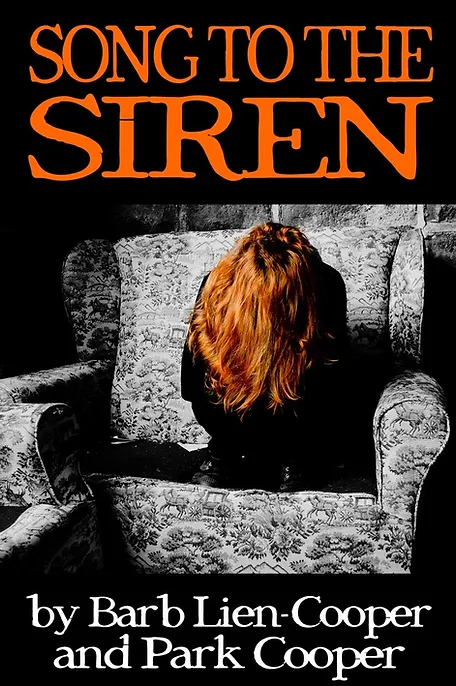
Okay, time to find out what Barb and I have been doing for entertainment and to try to relax lately– In general, we like streaming old movies.
–Maigret Sets a Trap: First, we lost our wi-fi connection. So, we watched a blu-ray we own of a movie we hadn’t seen in a while: Maigret Sets a Trap from 1958 with Jean Gabin as French detective Maigret. In fact, he’s the Chief Inspector of all of France’s Quai des Orfèvres– a bit like their Scotland Yard. A serial killer is stalking women in Paris, and Maigret must put a stop to it. A brilliant and exciting film with the excellent Jean Gabin (who used to have a relationship with Marlene Dietrich). And around the time the blu-ray was over, the wi-fi was back!
–Down Three Dark Streets: 1954, with Broderick Crawford and Ruth Roman. An FBI man’s partner is killed in the line of duty– but which of the three cases that he was working on at the time was it that got him killed? Written by a husband-wife team called The Gordons, this film really satisfied, with a great last line that suggested everything you need to know to extrapolate what life is going to be like for the two lead characters after the movie’s done. And Mr. Gordon really was an FBI man for a few years! In fact, J. Edgar Hoover wanted to block this film at first (until we calmed him down) because he was afraid we’d give away all the FBI’s secret crime-solving techniques to criminals!
Okay, it’s my turn to do one of these… Barb suggested that I write about what I call TAGCRAFT.
What, you might very naturally ask, is tagcraft? Well, it’s about the writerly art and science of doing the tags.
Ah yes, the tags, you say, nodding, reaching for a phone book to call me a team of mental health experts.
Yeah, I say, taking the phone book away from you. “Tags” are the term I came up with to describe the stuff that’s happening in prose fiction that isn’t the dialogue, the descriptions, nor the narration as such. (I invented the term after saying “Wait, they carried this back-and-forth dialogue too long, the reader’s gonna lose track of who’s saying what– they need to tag the spoken words more ofren with who said them.”) It’s stuff that counts as narration, but it’s not what we normally think of as narration. What we normally think of as narration is:
The more I thought about it, the more I couldn’t help but feel there was something fishy about Thorvaldson’s story, in spite of my gut telling me I was right when I’d first had him figured for a very honest guy. Could he be covering up for someone? Or could he be wrong? Like, his cheap watch had stopped, and it wasn’t really 2 o’clock when he’d seen the blonde at all? No, he would’ve mentioned something like that, if he was really honest. Liars usually try to push the lie, but Thorvaldson had seemed very casual about everything, like he had nothing to prove.
See? Like that, in a big block. But there’s a more subtle kind of narration, the kind that mortars the little stones of dialogue in place. Let’s see, I just made up that stuff with Thorvaldson off the top of my head, but let’s go to Hammett’s The Thin Man— no, tell you what, better go with something I know is in the public domain, just entered a year or two ago, The Great Gatsby:
A subdued impassioned murmur was audible in the room beyond, and Miss Baker leaned forward unashamed, trying to hear. The murmur trembled on the verge of coherence, sank down, mounted excitedly, and then ceased altogether.
“This Mr. Gatsby you spoke of is my neighbour—” I began.
“Don’t talk. I want to hear what happens.”
“Is something happening?” I inquired innocently.
“You mean to say you don’t know?” said Miss Baker, honestly surprised. “I thought everybody knew.”
“I don’t.”
“Why—” she said hesitantly. “Tom’s got some woman in New York.”
“Got some woman?” I repeated blankly.
Miss Baker nodded.
“She might have the decency not to telephone him at dinner time. Don’t you think?”
Almost before I had grasped her meaning there was the flutter of a dress and the crunch of leather boots, and Tom and Daisy were back at the table.
“It couldn’t be helped!” cried Daisy with tense gaiety.
She sat down, glanced searchingly at Miss Baker and then at me, and continued: “I looked outdoors for a minute, and it’s very romantic outdoors. There’s a bird on the lawn that I think must be a nightingale come over on the Cunard or White Star Line. He’s singing away—” Her voice sang: “It’s romantic, isn’t it, Tom?”
“Very romantic,” he said, and then miserably to me: “If it’s light enough after dinner, I want to take you down to the stables.”
The telephone rang inside, startlingly, and as Daisy shook her head decisively at Tom the subject of the stables, in fact all subjects, vanished into air.
It’s no Hammett, I admit, but look at that stuff. You know how a teenager would write that stuff? Like this:
“This Mr. Gatsby you spoke of is my neighbour—” I said.
“Don’t talk. I want to hear what happens.”
“Is something happening?” I asked.
“You mean to say you don’t know? I thought everybody knew,” said Miss Baker.
“I don’t.”
“Why, Tom’s got some woman in New York.”
“Got some woman?” I said.
Miss Baker nodded.
Now go back up and look at the difference. It’s not like a screenplay, but it fills in stuff for you. “My neighbour—” I began. I inquired innocently. Honestly surprised. She said hesitantly. I repeated blankly. It shows you how to read it, how to hear it in your head. And that’s just in that early part. I call those tags, because they’re attached to the dialogue, innocuously fluttering in the breeze, except there is no breeze, so you don’t notice them nor think about them half the time. But they’re important, those tags. It takes good work for you to not notice them. Sometimes, as with said Miss Baker, honestly surprised, the tag comes in the middle of the line. And there’s an art and science (which, again, I call tagcraft) to how you can drop all tags in an intense conversation between two people– you can’t pull it with a third person there, or the reader has no idea who’s speaking, it has to be two people taking turns– the art and science is how long you can pull the lack of tags off and just let the dialogue greyhounds run down the track by themselves.
And look at all the adverbs! Excitedly, innocently, blankly, searchingly— anybody who goes by most people’s writerly advice on the internet in the 21st century would have F. Scott Fitzgerald taken out behind the barn and shot.
Look, “never use adverbs” is Stan Hates Green Covers. One day, someone at Marvel Comics (I think it was Jim Steranko?) wanted to do a mostly-green cover, but they were told “Stan hates green covers.” So the artist went to Stan and showed him what he wanted to do, and Stan loved it. “That’s great!” said Stan. “Really makes it stand out!”
“Um, they told me you hate green covers.”
“Yeah? Oh, well, yeah, I told them that because they were doing it wrong, and it was an eyesore, and it was easier to get ’em to stop by just telling ‘em I hated green covers than to sit ‘em down and give a long explanation why what they were doing wasn’t working. But THIS that you’re doing HERE is great, go do it!”
It’s certainly possible to overuse adverbs, trying to think of a clever alternative to SAID every time. So yeah, don’t do that. But look at Ol’ F. Scott up there. As long as you don’t do it more than him, you’ll be okay– IF you know what you’re doing.
Adverbs are not a crime, fellows and girls and other compatriots. Ol’ F. Scott puts ’em on every page he feels like it, and based on the above, he apparently thinks they’re necessary on almost every page.
When I started editing for my wife Barbara, she’d get in such a cat-pounding-away-at-keyboard-meme frenzy, she was turning prose out at such speed that she just let me worry about the tagcraft for her, because she could go even faster that way, because her strong suit is pure dialogue (and plot, but that’s a whole other story). When she saw my tagcraft, she approved, and we just entered into full symbiosis from there. So I’ve had at least a million words of practice, I’ve lost count, probably two by now, especially tagcrafting my own prose, let alone the stuff that comes straight from her. Tags matter.
Take:
“Well, since you asked,” he said, “I guess I’m saying I have a problem with you holding hands with my wife like that.”
Okay, now, look at this. Look what you can do:
“Well, since you asked,” he said drunkenly, slurring his words a bit on “since” and “asked–” –they became “shinsh” and “ashked–” “–I guess I’m saying I have a problem with you holding hands with my wife like that.”
“Well,” he said, very slowly and quietly, “since you asked, I guess I’m saying I have a problem with you holding hands with my wife like that.”
“Well, since you asked,” he snarled, “I guess I’m saying I have a problem with you holding hands with my wife like that.”
“Well, since you asked,” he chuckled, “I guess I’m saying I have a problem with you holding hands with my wife like that.”
“Well, since you asked,” he said, his hands twitching, his eyes darting about the room for a blunt instrument, “I guess I’m saying I have a problem with you holding hands with my wife like that.”
“Well, since you asked,” he sighed, “I guess I’m saying I have a problem with you holding hands with my wife like that.”
See what I mean? Tags matter–and I constantly see people who tagcraft like amateurs, and so I weep with joy when I see someone who’s mastered the art of doing them right yet keeping them from stealing attention from the rest of the prose, or better yet someone who knows how to make the tags as good as the rest of it.
So give a thought to your tags, when you write, and don’t be afraid of an adverb now and then. Treat them kindly and gently, and they’ll treat you accordingly.
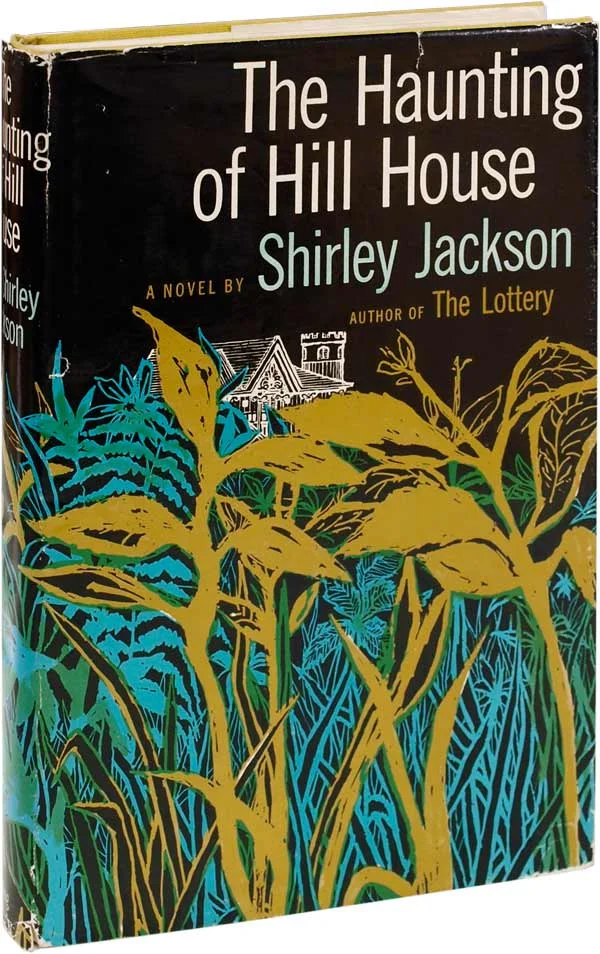
I’ve read the novel The Haunting of Hill House five times.
The first time, as a teenager, I was frightened by the book, but I also felt conned, not by the author, but by the house itself. When I got to the last page, I said: “Poor Eleanor has been duped by Hill House.”
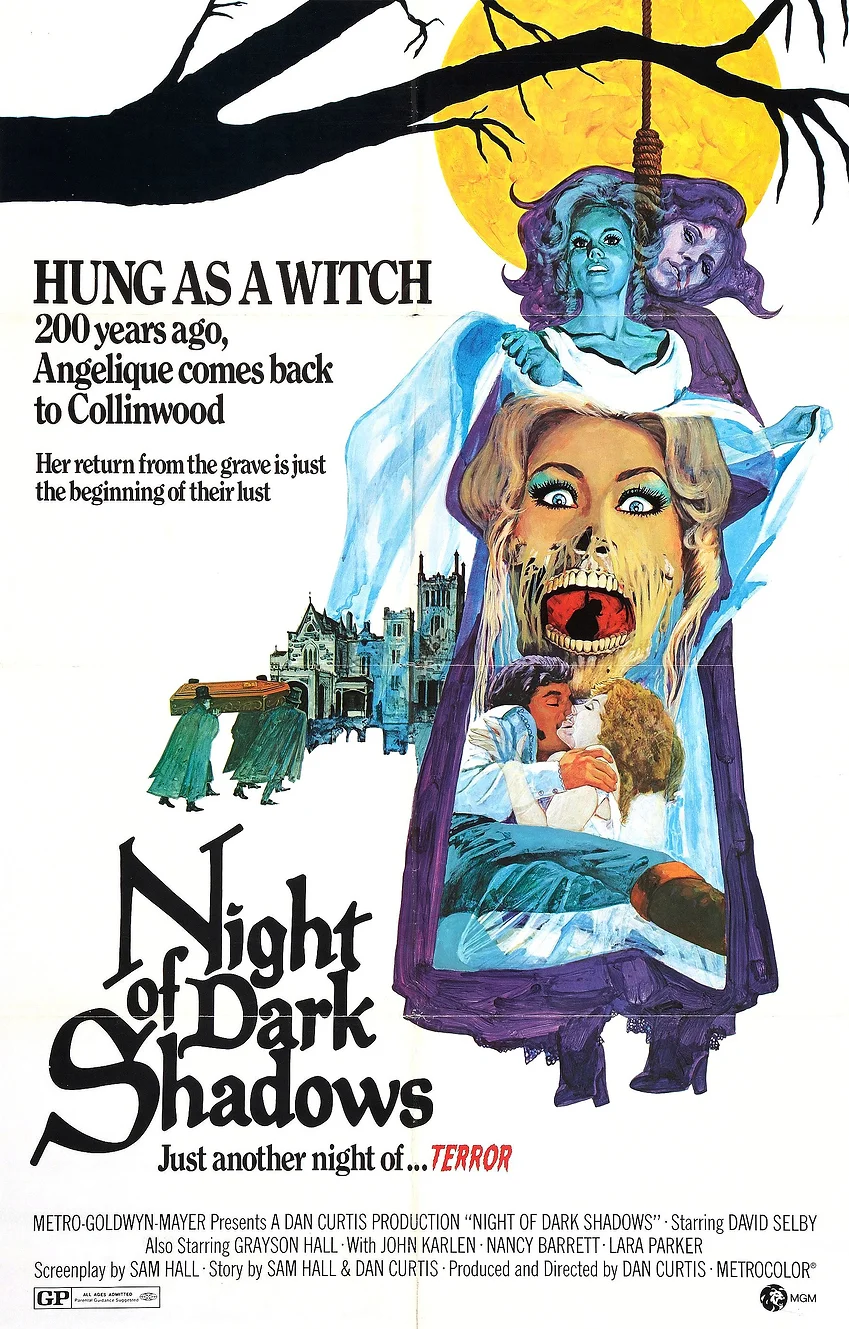
Okay, so, some of you know that Barb and Park’s favorite TV show is the 1966-1971 gothic soap opera DARK SHADOWS. They made two movies about it (and then in 2012, Tim Burton also made a movie connected to it, but we don’t talk about that one). Anyway, some time ago, Barb and I riffed the WHOLE MOVIE (not out loud. It was only out loud at our house).
Halloween-time is one of our favorite holidays. Barb likes to watch lots of horror movies, more and more as we approach Halloween. This month we started out having trouble finding good things to watch, but then we started doing better and better.
That’s the cover image, by Afua Richardson, not to be confused for being the artist of all the rest of it, Jimmy Bott…
Half Dead was a result of us saying: “What people seem to want these days is just people fighting vampires and kicking ass… and vampires that kick ass… What if we just wrote a comic that was nothing but vampire ass-kicking, just to see what would happen and if anyone would want it?”