Blog

  • Betraying The Reader’s Trust

    Betraying The Reader’s Trust

    Previously, I mentioned my three “rules” of writing, which are:

    “Rule” 1: Never bore your reader.

    “Rule” 2: Never betray your reader’s trust.

    “Rule” 3: If your ending doesn’t satisfy the reader, they won’t come back to read your next novel.

    My husband and writing partner said to me: “You’re going to have to explain the second one.”

    Yeah, I do have to.

    Let me list ways of betraying the reader’s trust:

    1/ Not playing fair with the reader. Dorothy L. Sayers said that a detective novel must play fair with the reader by giving the reader all the clues needed to solve the mystery.

    If you’re writing a mystery novel and you do the following, you have betrayed the reader:

    a/ If a character that’s hardly in the novel did the murder, or a character that’s introduced late in the book did it.

    b/ If the ending depends on esoteric knowledge that the average reader doesn’t know.

    For instance, a detective knows all the symptoms of dying by an obscure poison, but we know nothing about that poison. Now, in the internet age, we might be able to do research about obscure poisons, but in the olden times, if you couldn’t find the time to go to the library and spend hours reading up on obscure poisons, you’d probably feel cheated by the ending of a story like that.

    c/ If you fail to mention an integral element to the mystery.

    For instance, if your villain stuck the body in the fridge for about an hour before putting the body in the living room, screwing up the coroner’s time of death, but you failed to mention that the apartment had a refrigerator large enough to store a human body.

    I can think up more, but you get the idea.

    2/ Changing a character’s character alignment in order to make the character follow the plot. I call this the “Game of Thrones” problem.

    3/ You come up with a crazy, convoluted plot, but the truth is, all your characters are dead. Guess which TV show botched that plot.

    4/ The plot has several complications that the reader is reading the darned thing to figure out, but they all kind of fade away without adequate resolution. 

    I got hooked on a manga once that had this problem. I won’t say the name of it, as the manga fans would hate me, but the plot complications were like this:

    a/ Two young men loved the same young woman. We expected a big confrontation, but that subplot just petered out.

    b/ There was a big mystery that we expected the young woman to be instrumental in solving, and… that didn’t happen.

    We sat there, volume after volume, waiting to learn the big secret and how she would solve it.

    The secret’s origin was boring, and the solution to it was a big shrug. What was worse, the young woman had nothing to do with solving the mystery!

    Wicker Man Studios - Betraying the Reader's Trust

    5/ The audience has expectations concerning how the plot will conclude—and you leave them disappointed. While it’s wonderful for an author to defy the audience’s expectations, you must come up with something even better than the audience had in mind or else the audience will get annoyed.

    WandaVision had this problem. (Spoiler alert ahoy!)

    The show was set up as a “can you, True Believer Marvel fans, solve the mystery before the casual viewer can?” Every week, there were “Easter egg” clues. The hardcore fans followed the clues diligently, and came up with some bitchin’ fan theories. Now, we all know that some easter eggs do not hatch. But with WandaVisionnone of the easter eggs hatched. Even the casual viewership figured out who the “big bad” was pretty quickly. 

    Now, some people will yell “fannish entitlement” concerning the letdown that the fans had, and will say that the Marvel fans shouldn’t have concocted such wild fan theories. But the whole ad campaign, the marketing campaigns, and so on, were aimed at the hardcore Marvel fans solving the mystery of WandaVision before everyone else. The fans were actively encouraged to be one step ahead of the rest of the audience, as if to say, “What about you, viewer? Can you stay one step ahead of the other viewers? Do you see what’s coming?”

    We expected Nightmare, and/or the X-Men (or at least one or two of them). We ended up with a “boner” joke. That felt like a real insult to the “True Believer” Marvel fans.

    Now, maybe getting out the judgment hammer isn’t totally fair to WandaVision, because I understand that COVID screwed with them being able to make the series the way they’d hoped to make it, but… you see what I’m talking about, right?

    Many viewers were fine with the series, as Elizabeth Olsen’s performance was inspired, but others still felt let down.

    6/ The author changes genres on the audience in order to exploit the audience’s emotions.

    I was watching a movie once that seemed to be a feel-good movie…

    …and then, for no reason, tragedy occurred. It just came out of nowhere. I’m a person who gets emotionally attached to a book or a movie, so if the screenwriter had played it right, I would have gotten teary-eyed.

    Instead… I laughed my head off. I’m sure some people would call me a monster, because the ending was soooo tragic, but the screenplay writer had done nothing to gain my trust! And if the rest of the movie had gone back to being a feel-good movie, I guess maybe I would’ve shrugged. But a tragedy that comes out of left field just to exploit my emotions is a betrayal of trust, so I ended up having a fit of the giggles instead of getting sad.

    You can’t use the emotional hard sell on an audience member if you haven’t gained their trust by establishing the idea that tragedy might happen. You know, little clues here and there, along with a little foreshadowing. If you don’t do that, but you expect the audience to shed tears, the audience might join me in shaking their damned heads at your ending.

    There are other ways to betray your audience’s trust, like killing off the most interesting characters and leaving the boring ones, but I think you get my drift.

    So… I guess I’m saying this: The audience remembers an authorial betrayal. Once-bitten, they become twice-shy concerning trusting you as an author again.

  • What If…?

    What If…?

    As a writer, one of the few questions I hate to hear is: “Where do you get your ideas?”

    The problem is that the question’s much too broad. If you asked me where I got the ideas for the stories in my book The Talking Cure, I could tell you. If you asked me what inspired my book Song to the Siren, I could give you a fifteen-minute lecture about Shirley Jackson, “Turn of the Screw,” Oliver Onions’ “The Beckoning Fair One,” and so on.

    But the broadness of the question makes it sound like there’s an idea store where I purchase my ideas. If only!

    I could tell you that ideas come from Jung’s “Collective Unconscious,” where all ideas are supposedly stored, but I can’t tell you how to get there, as I don’t exactly know myself.

    I could tell you that ideas just come to me, but that sounds like a cop-out, like I’m holding out on you.

    I could say “I don’t know,” but that’s both true and false.

    I can tell you that I have my radar up for ideas all of the time.

    –I see a movie? I might think, “Oh, look, that’s different. Maybe if I took the idea and did this instead…?”

    –I read a book? I might think, “I like the tone and atmosphere of this book. How can I take this tone and atmosphere and change it to suit my needs?”

    –I see a picture of a mythological being, I might think, “Hey, no one’s written about that monster (as far as I’m aware)… Wonder if I did my research and…?”

    My mind is always looking for that idea that sparks other ideas in my head.

    I do a ton of research concerning my books, but it’s research that I enjoy. For instance, I probably wouldn’t write a novel about Revolutionary France, since I’m not all that interested in French history. But if I read a blog about paganism in Ireland, I might think, “Hey, that’s interesting. Let’s look up the myths mentioned here.”

    But when it comes down to it, my story ideas come from the 4 questions I always ask myself:

    1/ What if…?

    For instance, what if there were zombies on a space station?

    2/ What hasn’t been done before?

    For instance, I wrote a story where Ophelia was pixelated by the fairies because… well, you’d have to read the story.

    3/ If it has been done before, how can I do things differently?

    For instance, most authors write stories about imaginary friends that turn out to be demons or ghosts. Wonder if the imaginary friend is a protective being instead of evil, but then…

    4/ Why do I have to write this story?

    Not enough authors ask themselves this question. They just say, “A writer writes,” then they write the story, even if it’s been done to death. “A writer writes, I have this idea, so I have to write it.”

    If I don’t feel I’m the person to write the story, I let it go.

    I came up with a cozy teatime mystery once, but I thought, “Nah, I hate those sorts of things. They’re all the same.” So, I let the idea go.

    It’s okay to let an idea go if it doesn’t make you enthusiastic about writing the story…

    …because if the story really wants to be written by you, it will come back.

    For instance, I had an idea for a short sequel story to Jane Eyre. It was going to be called “A Year and A Day.” But I thought, “Anyone could write this story. It’s not all that original.” So, I let the idea go.

    But I gotta tell you, that story followed me around like a puppy. I told it to go away—it wouldn’t go away.

    So, finally, I cracked open Jane Eyre, and I realized, “The only reason I didn’t want to write this story was that I didn’t have a good ending. But what if…”

    I wrote that story in about an hour, because it needed to be told. And it needed to be told by me.

    There is nothing like the excitement of having a story say: “You and me! Come on, write me NOW! Yeah, right now!”

    You’ll know if you’re meant to write a story, because if you are, you get really excited about writing it.

    So…

    Does that answer the question? Because I don’t really have a better answer than that.

  • Why I Am Sometimes Hesitant To Give Writerly Advice

    Why I Am Sometimes Hesitant To Give Writerly Advice


    There’s a whole cottage industry out there concerning writerly advice. Many, many blogs feature everything novice writers “must” and “should never” do. Frankly, if I were a novice, I’d be so confused that I couldn’t write one word, out of fear that I’d be doing something wrong.

    I’m going to tell you a secret—or rather, I’m going to quote W.S. Maugham:

    “There are three rules for writing a novel. Unfortunately, no one knows what they are.”

    ― W. Somerset Maugham

    This is the honest truth about writing. No one—no matter how rich, how well-known, nor how influential—knows the rules of writing, because, honestly, there are no hard and fast rules concerning writing.

    What there are, instead, are good suggestions. You need to weigh those good suggestions and ask, each time, “Does this suggestion work for me?”

    But “10 Good Suggestions For Writing A Great Novel” isn’t a very clickbait title, is it?

    In the end, these “rules” are just suggestions that you should take with a huge grain of salt.

    Look, I get it. You’re just starting out, so you’re desperate to figure out if you’re doing it right. You want a recipe for writing a novel. But novels are not something you can write with a checklist. Novels are something you write by instinct. Only experience can help you become a good writer. Only by getting your hands dirty can you know how to write a book—in other words, learn by doing.

    You have to find your own methodology for writing. No one can do that for you. You learn by trial, error, and infinite patience.

    So, I’m hesitant to give you writerly advice, as that makes it sound like I have the secrets to good writing, and that if you read my suggestions, you’ll become a great writer.

    That’s not how it works. If I had the secrets, I’d give them to you.

    But I do have “getting my hands dirty” experience, so I’ll give you what I’ve learned. If what I’ve learned applies to you, take what you need. If it doesn’t, go with what works for you.

    However, since I’m thinking about these “three rules of writing a novel,” I’ll give you what I’ve learned:

    “Rule” 1: Never bore your reader.

    “Rule” 2: Never betray your reader’s trust.

    “Rule” 3: If your ending doesn’t satisfy the reader, they won’t come back to read your next novel.

    So, I’ll keep writing out my suggestions, but remember this: Don’t try to follow perfectly in my footsteps. I’m a stranger here myself—because every time I write a story, I’m back to square one. Every story of mine requires a new perspective and a new methodology. I’m fortunate enough to have the skills that I’ve learned by doing, but every story is still virgin territory for me. That’s what makes writing exciting.

    I have no road maps to help you write a perfect book. But I do have experience, which I’m glad to share with you.

    Let’s learn together.

  • How to Read Like a Writer

    How to Read Like a Writer

    Hey there again!

    As I mentioned last time, I dislike writers who tell novice writers to “Read!” without elaborating on the idea.

    So, I wanted to talk more about reading like a writer. The last time, I talked about what a writer should read. This time, I want to talk about how to read like a writer.

    There’s a difference between reading like a reader and reading like a writer. A reader is reading a book in order to enjoy the book. A writer reads a book not just for enjoyment, but also in order to find out how the writer is doing the magic we know as writing.

    A good writer must be an analytical one. We must encounter a book like a student encounters a textbook. We have to be here to learn.

    So, here’s a writing exercise that will teach you how to read like a writer:

    1/ Find a used copy of your favorite book, preferably one with huge margins. You’ll need huge margins, because you’re going to be writing in the margins.

    2/ Get some pencils for writing in the margins, underlining sentences, circling words, and putting stars or check marks near your favorite scenes, lines of dialog, etc.

    3/ Make a Word file entitled “What I Am Learning From My Favorite Book,” and save it.

    4/ Slowly, start reading your book. Read a scene, then sit with the scene. Write down in your Word file:

    a)   What did I like about this scene?

    b)   Is there anything I didn’t like about this scene?

    c)   What is this scene trying to accomplish?

    d)   Is this scene well-paced, or does it go on too long (or is it a little too short)?

    e)   What have I learned from this scene about the book, especially concerning the characters?

    f)   What can I, as a writer, learn from this scene?

    5/ As you’re reading the scene, underline any words, phrases, or sentences you like/love/hate. Write your impressions in the margins. Star or check mark any paragraph you want to remember.

    6/ Slowly but surely, work your way through this book. Analyze every scene until you’re done.

    At the end of the book, ask yourself:

    1/ What have I learned about writing from this book?

    2/ Are there any approaches to writing used in this book that I want to borrow in terms of my own writing?

    I know it sounds like slow work—and it is—but I can promise you, after you do this with your favorite book, you will read every other book/story out there the way a writer does, as opposed to the way the audience does.

    I’m not trying to make more work for you, but I’m telling you, it will save you a lot of time and effort in the long run. You’ll be miles ahead of other novice writers who only know how to read a book like a reader.

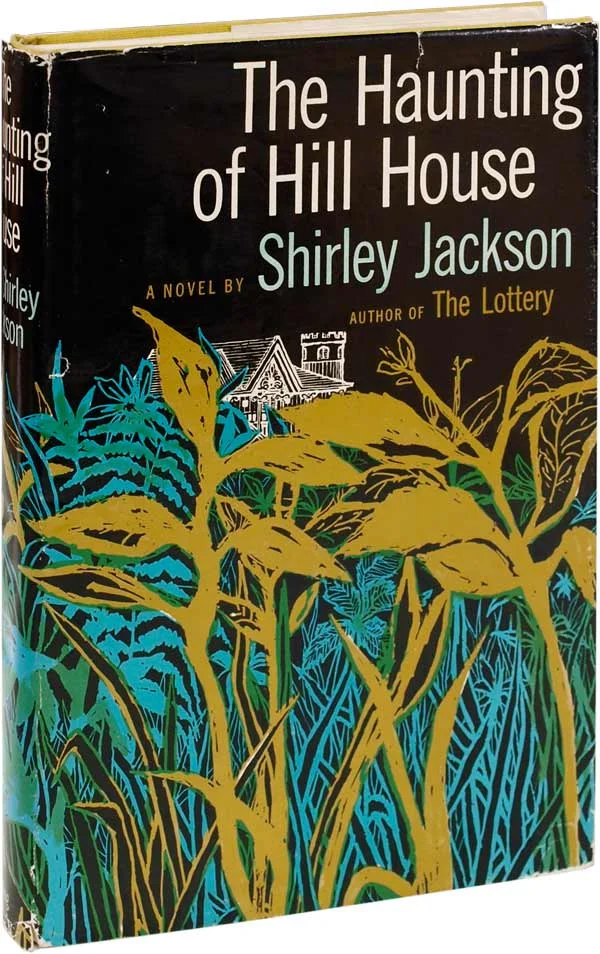
    I still use this methodology myself on occasion. One day, I discovered that I had writer’s burnout, which is writer’s block writ large. In desperation, I took The Haunting of Hill House and did a deep read of the novel with my husband. By the end of the book, I had the germ of an idea for my book Song to the Siren.

    I’m going to use the metaphor of stage magic. Let’s see ourselves as wanna-be magicians, standing backstage, looking at all of the other magicians. Learning how the other stage magicians do their tricks will make you become a magician too. All good writers are that novice magician waiting in the wings, watching the master magicians doing their job. Even if it’s a trick we know, even when we know how the tricks are done, we still look and listen to the stage patter, because there is more to the act than just sawing a lady in half. Once you see the magician as someone you can learn from, as opposed to someone who’s an unapproachable demi-god, you’ll be able to become a magician yourself.

    Then someday, you’ll be the person the novices are looking at.

    Someday, you’ll be the one that the novices are asking for advice.

    When that day comes, I hope you don’t blow them off by telling them to “Read!” without elaborating on what you mean by that. 

    Instead, I hope that you’ll dig back to the days when you were struggling to do your magic, and you’ll be generous enough to reveal a few of your tricks to those who admire you.

    Because then, you’ll truly be a master magician, instead of just a professional one.

  • Writers Read… But WHAT Should They Read?

    Writers Read… But WHAT Should They Read?

    Few things annoy me more than when a novice writer asks for writerly advice, only to have a writer smile a “I’m so clever” smile and say: “Read!” It’s a condescending, patronizing thing to say, since most novice writers are reading.

    Yes, reading is important. Reading is a continuing education class for writers.

    Yet when a novice writer says “What should I read?” the writer gives them that same smile and says, “Everything.”

    Yes, there is a grain of truth in that. Every bit of writing out there can teach a writer something, but it doesn’t really answer the question.

    So, I’ll give you some advice concerning what to read:

    1/ If you’re researching a topic for a book, read about that topic. For instance, with our book Song to the Siren, I had to do a lot of research not just about Irish mythology, but also about mental illness in teenage boys.

    Do deep research, not just a quick glance at Wiki. Even if you’re just writing a “freak of the week” monster story, look into the cultural background of that monster. Look for the mythological tales about that monster.

    Wiki is a starting point for research, not the end point.

    2/ If you’re a genre writer, start with reading what contemporary writers are writing in your genre– but please don’t stop there. If you do, you’ll just copy the competition. Instead, find out who influenced those writers, and read those writers’ influences. Then read the writers who influenced the writers your contemporaries like. Go as far back as you feel comfortable going. There’ll be a point where the prose/prose style is too dated for you to get into. For instance, I write about the supernatural, so my roots go way, way back– but they stop with Ann Radcliffe, as her plots and prose style are simply too old-school for my liking. That’s okay– there’ll be a certain point where you just can’t relate any longer.

    3/ Once you’ve read what’s in canon in your genre, start looking outside of canon for lesser-known writers. For instance, I love old ghost stories– but having read M.R. James, E.F. Benson, Elizabeth Gaskell, and so on, I still hungered for ghost stories. Eventually, I found lesser-known writers like Mary Elizabeth Counselman, Rosemary Timperley, and Richmal Crompton (better known for the “Just William” stories than for her ghost stories).

    So, why go for the more obscure writers, you might ask? Well, writers who only read what’s in canon are influenced by what’s in canon. If you read the more obscure writers, your ideas may seem fresher than writers who only read their contemporaries or what’s in canon.

    4/ Read to your weaknesses instead of your strengths. That sounds a little wonky, but let me explain: all writers are good at some aspects of storytelling, and less good at others. You, as a novice writer, might be good at coming up with ideas, but not so good at writing dialog. So, if you want to get better at writing dialog, read authors who write good dialog. I’ll give you a personal for-instance: my writing weakness is description, so I started reading works that had a handle on how to describe characters. As I read, I thought, “Okay, that’s how you do it.” Believe me, it helped.

    5/ Once you’ve read what’s in canon in your genre, get adventurous, and read outside your given genre. When people only read inside their genre, they start sounding like the other voices in their genre. There starts to be a tunnel-vision effect concerning ideas and inspiration. However, if you read outside your genre, you’ll encounter ideas that are new to you. When you incorporate ideas that are new to your genre, you’re more likely to become more innovative. If your ideas are different, it’ll be because your influences are different.

    NEXT TIME:  HOW to read like a Writer

  • Barb’s Literary Corner: THE PRIME OF MISS JEAN BRODIE

    Barb’s Literary Corner: THE PRIME OF MISS JEAN BRODIE

    One time Barb got a little obsessed with The Prime of Miss Jean Brodie. Barb answered some online student essay questions.

    MASSIVE SPOILER ALERT: The following Literary Corner involves big ol’ spoilers for the plot of the book and the film The Prime of Miss Jean Brodie.

    (more…)
  • What Really Walks Alone in Hill House?

    What Really Walks Alone in Hill House?

    by Barb Lien-Cooper

    MANY SPOILERS AHEAD (You Have Been Warned)

    I’ve read the novel The Haunting of Hill House five times.

    The first time, as a teenager, I was frightened by the book, but I also felt conned, not by the author, but by the house itself. When I got to the last page, I said: “Poor Eleanor has been duped by Hill House.”

    (more…)
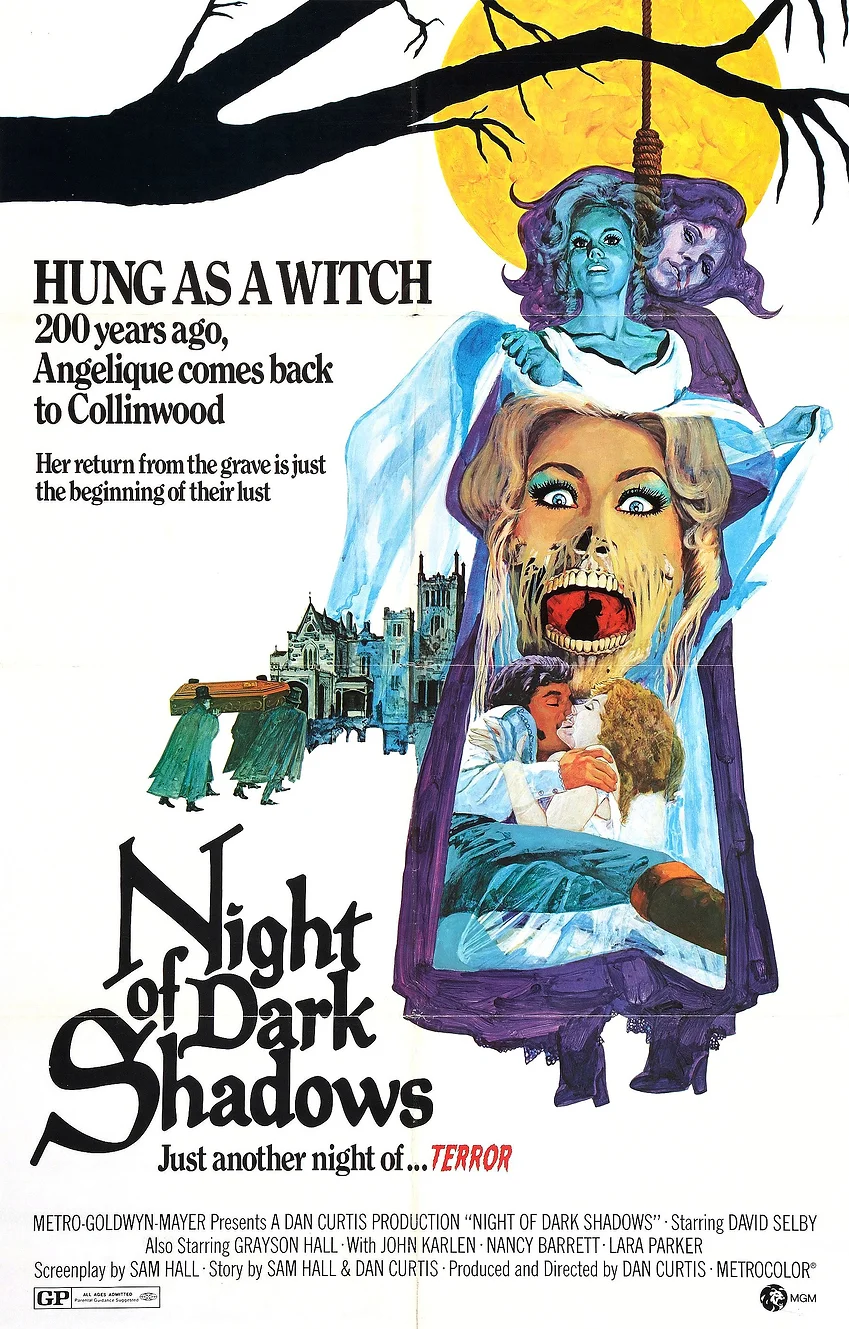
  • Park and Barb riff the film NIGHT OF DARK SHADOWS

    Park and Barb riff the film NIGHT OF DARK SHADOWS

    Okay, so, some of you know that Barb and Park’s favorite TV show is the 1966-1971 gothic soap opera DARK SHADOWS. They made two movies about it (and then in 2012, Tim Burton also made a movie connected to it, but we don’t talk about that one). Anyway, some time ago, Barb and I riffed the WHOLE MOVIE (not out loud. It was only out loud at our house).

    (more…)
  • PARK AND BARB’S PARKTOBER MOVIE MARATHON

    PARK AND BARB’S PARKTOBER MOVIE MARATHON

    Halloween-time is one of our favorite holidays. Barb likes to watch lots of horror movies, more and more as we approach Halloween. This month we started out having trouble finding good things to watch, but then we started doing better and better.

    WE HAVE ALREADY WATCHED, THIS MONTH:

    (more…)
  • Barb Halloween Update: 10-20-2022

    Barb Halloween Update: 10-20-2022

    I’m listening to Howling Wolf right now, as sometimes, you just need the toughest electric blues possible.

    (more…)